
An unanswered message. A cancelled plan. The words, “I need some space.”
Small moments can bring up big questions in a relationship.
You might wonder whether someone is losing interest. You might become quiet and deal with the uncertainty alone. Or you might want reassurance, then feel uncomfortable when the other person comes closer.
Attachment styles describe patterns in how we connect with others, trust them, and respond when closeness feels uncertain.
Understanding these patterns can give you language for experiences that previously felt confusing. It can also help you express your needs, recognise recurring difficulties, and make more thoughtful relationship choices.
What Are Attachment Styles?
Attachment theory explores how people seek connection and support from important others. It began with John Bowlby’s work on children’s bonds with caregivers and later developed into research on adult relationships.
Researchers commonly describe adult romantic attachment using two dimensions:
- Attachment anxiety: How much you worry about rejection, abandonment, or another person’s availability.
- Attachment avoidance: How uncomfortable you feel with emotional closeness, vulnerability, or relying on others.
The four familiar attachment styles describe combinations of these dimensions. They are simplified descriptions of patterns that vary in strength. R. Chris Fraley
An attachment style is not a psychiatric diagnosis. One disagreement, delayed reply, or preference for time alone cannot establish someone’s pattern.
What Are the Four Attachment Styles?
The four commonly discussed adult attachment styles are secure, anxious-preoccupied, dismissive-avoidant, and fearful-avoidant.
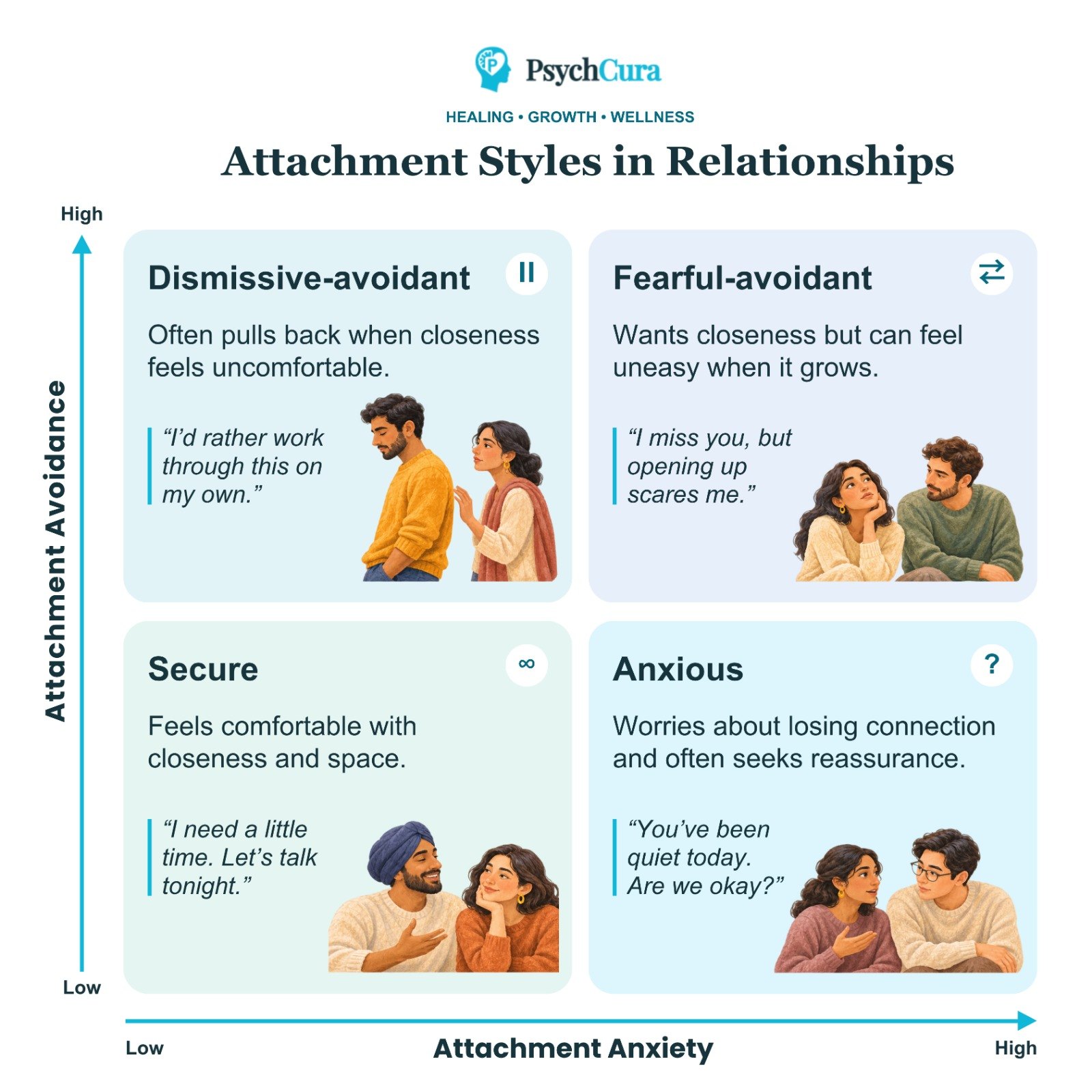
1. Secure Attachment Style
Secure attachment involves relative confidence in connection and comfort with both giving and receiving support.
A person with more secure patterns can usually express their needs while respecting the other person’s independence. Disagreement may feel upsetting without automatically meaning the relationship is ending.
What secure attachment can look like
Imagine your partner cancels a plan.
You feel disappointed and say:
“I was looking forward to seeing you. Can we arrange another time?”
You acknowledge your feelings and give the other person an opportunity to respond.
Other examples might include:
- Asking for comfort after a difficult day.
- Maintaining friendships and interests outside the relationship.
- Saying no without assuming it will cost you someone’s affection.
- Acknowledging a mistake and returning to repair the conversation.
- Recognising when a relationship repeatedly fails to meet reasonable needs.
Secure attachment does not mean accepting everything calmly. Expressing hurt, setting boundaries, and leaving an unhealthy relationship can also reflect respect for your needs.
2. Anxious Attachment Style
Anxious attachment, also called anxious-preoccupied attachment, involves heightened concern about rejection and the availability of someone important.
Closeness may feel reassuring, while uncertainty brings worry and an urgent need to reconnect. Frequent reassurance seeking and fear of abandonment are commonly discussed features of this pattern. health.clevelandclinic.org
What anxious attachment can look like
Your partner has not replied for several hours.
You begin thinking:
“Were they upset after our last conversation? Should I send another message?”
You reread the conversation, check your phone, and find it difficult to focus.
The observable event is a delayed reply. The feared meaning is that the relationship is in danger.
Other experiences worth exploring include:
- Hiding disappointment because expressing it feels risky.
- Agreeing to things you do not want to preserve closeness.
- Apologizing before you know whether you did anything wrong.
- Feeling reassured briefly, then needing to ask the same question again.
Wanting reassurance is understandable. The useful question is whether your response helps address the concern—and whether the relationship itself is dependable.
3. Avoidant Attachment Style
Dismissive-avoidant attachment generally involves discomfort with emotional dependence, vulnerability, or becoming very close to another person.
Someone may care about a relationship while finding it difficult to ask for support or remain engaged in emotional conversations. Avoidant attachment should not be interpreted as proof that someone cannot love or does not care. health.clevelandclinic.org
What avoidant attachment can look like
After a disagreement, you want to end the conversation immediately:
“There is nothing to discuss. I will deal with it myself.”
You may turn toward work, practical tasks, or time alone rather than explain what you feel.
Independence itself is healthy. Consider whether it remains possible to receive support and return to difficult conversations.
A clearer request for space might sound like:
“I feel overwhelmed and need a break. Can we continue this conversation this evening?”
The request communicates a limit while giving the other person a realistic expectation of reconnection.
4. Fearful-Avoidant Attachment
Fearful-avoidant attachment describes a combination of attachment anxiety and avoidance: connection feels desirable, yet depending on someone can also feel threatening.
You may want reassurance but struggle to trust it. You may disclose something personal, then feel exposed and pull away.
What fearful-avoidant attachment can look like
You tell your partner that you want more emotional closeness. When they respond warmly, you begin questioning their intentions.
Your internal experience might be:
“I wanted you to understand me. Now that you do, I feel vulnerable.”
The focus for reflection is the tension between wanting connection and feeling unsafe within it.
Is fearful-avoidant attachment the same as disorganized attachment?
The terms often appear together in public discussions, but they do not have identical meanings across attachment research.
“Fearful-avoidant” describes a pattern in adult romantic attachment models. “Disorganized” and “unresolved” originate in other assessment traditions.
For personal understanding, describe the experience before choosing a label:
“I want closeness, but I become frightened when I start relying on someone.”
A label alone cannot establish someone’s history or explain everything happening in their relationships.
How Do Attachment Styles Develop?
Early experiences of care can influence what we expect from other people. Adult relationships and later experiences also deserve attention.
Research has found that attachment tendencies can differ across relationships. One study examining partner responsiveness found associations between feeling understood and cared for and greater attachment security; those associations do not, by themselves, prove that responsiveness causes change. PMC
You may feel relatively comfortable with a dependable friend and much more uncertain with a partner whose communication changes unpredictably.
When exploring your attachment patterns, consider:
- What have important relationships taught me about asking for help?
- When did these concerns become noticeable?
- Do I respond this way with everyone?
- What happens in relationships where I feel more at ease?
- How does the other person respond when I express a need?
These questions make room for your individual experience.
How Attachment Styles Can Affect Communication
Different responses to distress can become difficult to manage together.
Consider this fictional example:
One partner feels disconnected and asks increasingly urgent questions. The other feels pressured and withdraws. The withdrawal increases the first partner’s worry, which leads to more questions.
Both people may be trying to manage discomfort, while their responses make connection harder.
A useful conversation could begin:
“When I feel distance, I push for an answer. When you feel pressured, you pull away. What agreement would help us handle that moment?”
The agreement might include asking one clear question, requesting a manageable pause, and returning at a specific time.
An attachment label does not determine whether two people are compatible. Pay attention to how each person communicates and whether both take responsibility for change.
Is It an Attachment Pattern or a Response to Real Inconsistency?
Before assuming that your anxiety is entirely an attachment issue, examine the relationship.
An occasional delayed reply differs from repeated unexplained disappearances. A respectful request for space differs from silence used to punish someone.
Ask yourself:
- Are agreements usually kept?
- Can I raise a concern without being ridiculed?
- Do reassuring words match everyday behaviour?
- Does the other person acknowledge the impact of their actions?
- Is repairing difficulties a shared responsibility?
Your interpretations may need attention, and the relationship may also need greater consistency.
Understanding attachment should help you assess your experience more accurately. It should not encourage you to overlook dishonesty, coercion, or disrespect.
How to Understand Your Own Attachment Patterns
Choose one recent interaction and work through it slowly.
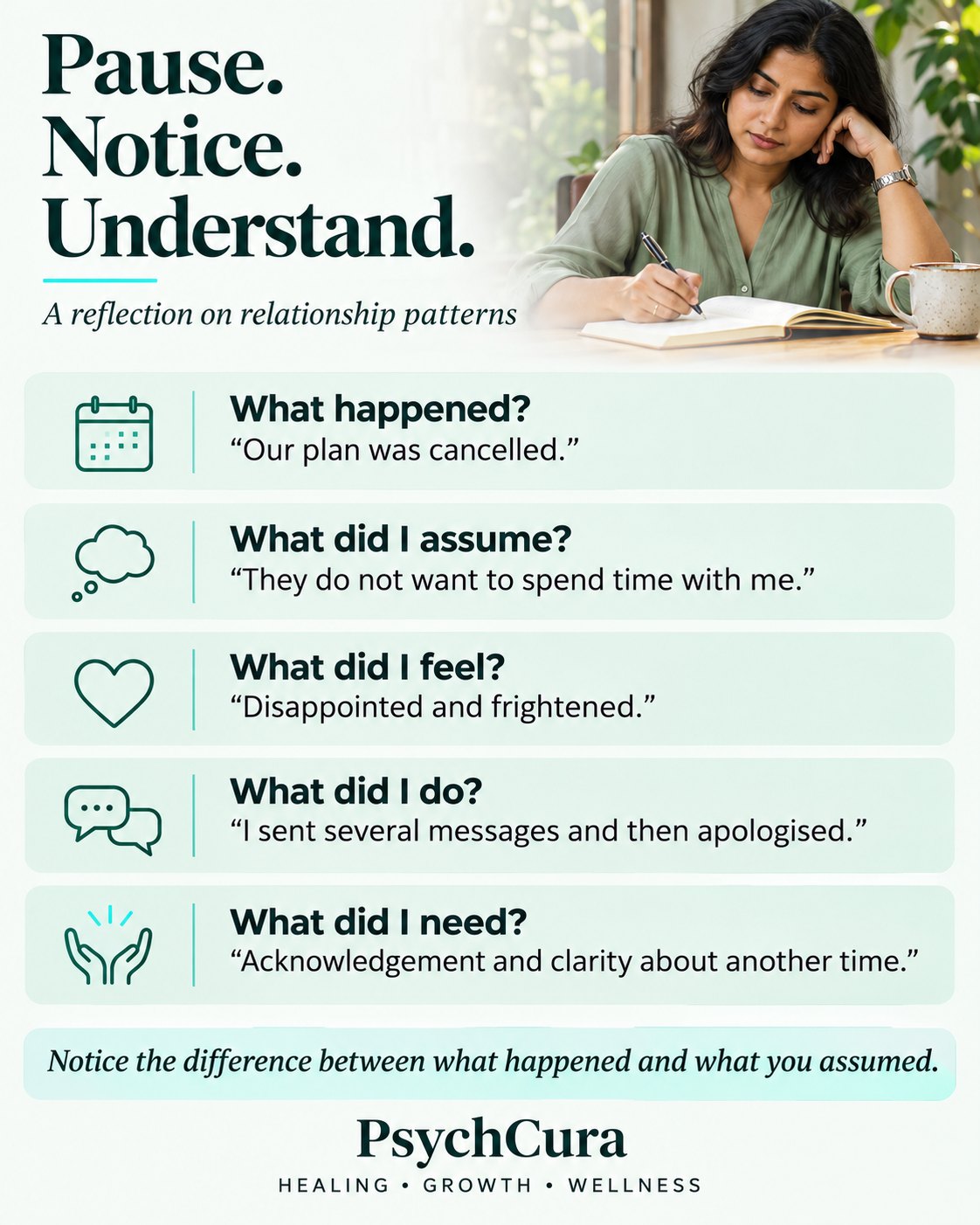
This exercise is an illustrative reflection tool, not an attachment assessment.
Look for recurring patterns and exceptions. Notice situations where you express yourself clearly or feel comfortable receiving support.
Can Attachment Styles Change?
Attachment patterns can vary over time and across relationships. They should not be treated as permanent personality verdicts. PMC
There is no universal timetable for becoming more securely attached.
A useful way to notice progress is to ask whether you have more choice in difficult moments. You may still feel worried, yet become better able to check your interpretation, communicate directly, or maintain a boundary.
Ways to Practise More Secure Relationship Habits
The following suggestions are starting points for reflection and communication, rather than a guaranteed treatment programme.
Separate the event from its meaning
Compare:
Observation: “We have spoken less this week.”
Interpretation: “You no longer care about me.”
Recognising the difference gives you room to seek clarification.
Express a specific need
Try:
“When plans change, could you let me know rather than leaving the evening uncertain?”
A specific request makes it easier to discuss what is realistic for both people.
Make space for emotion before choosing an action
If you feel an urge to send several messages or withdraw completely, pause briefly.
Ask:
“What am I hoping this action will achieve? How could I communicate that more clearly?”
You do not have to become perfectly calm before speaking.
Agree on how to pause difficult conversations
Discuss what a break means and when you will return.
“I need some time to think. I can talk again after dinner.”
An agreed pause depends on follow-through.
Maintain a life beyond one relationship
Keep making room for friendships, interests, rest, and personal goals.
Choose one manageable action, such as keeping an existing plan with a friend or returning to an activity you enjoy.
Evaluate the response to your boundaries
When you express a reasonable limit, notice what happens.
Can the other person discuss it respectfully? Can you tolerate their disappointment without immediately abandoning your position?
These moments provide useful information about both your reactions and the relationship.
When to Seek Support
Consider discussing your concerns with a therapist when relationship worries repeatedly disrupt your sleep, concentration, daily activities, or ability to make decisions.
Possible goals include understanding recurring fears, expressing needs, practicing boundaries, and examining relationship choices.
You do not need a confirmed attachment label to begin. A recent interaction can provide a useful starting point.
If a relationship involves coercion, intimidation, or abuse, seek confidential individual support before assuming that joint sessions are appropriate.
Support for Attachment Concerns at PsychCura
Recognising a pattern can help you understand what you want to explore. Personalised support can help you work through the situations where that understanding is difficult to apply.
PsychCura offers individual therapy for concerns related to anxious attachment and disorganized attachment patterns. Sessions can explore relationship anxiety, fear of abandonment, trust, boundaries, and emotional closeness.
Leave a comment