
Have you been feeling exhausted even after resting? Perhaps work that once felt meaningful now feels overwhelming, or you have become detached, irritable or unable to concentrate. You may keep telling yourself to work harder, stay positive or push through but nothing seems to restore your energy.
These experiences may be signs of burnout.
Burnout recovery is not about becoming strong enough to tolerate endless pressure. It is about understanding what has been draining you, restoring your resources and making sustainable changes so that the same cycle does not continue.
What Is Burnout?
The World Health Organization describes burnout as an occupational phenomenon resulting from chronic workplace stress that has not been successfully managed. It is characterized by three main dimensions:
- Feelings of energy depletion or exhaustion
- Increased mental distance from work, negativity or cynicism
- Reduced professional effectiveness
Burnout is not classified as a medical condition. However, its effects can still significantly influence your emotional wellbeing, physical health, relationships and ability to function.
Although the formal definition relates specifically to work, people commonly use the word “burnout” to describe similar exhaustion associated with caregiving, parenting, studying or carrying prolonged emotional demands.
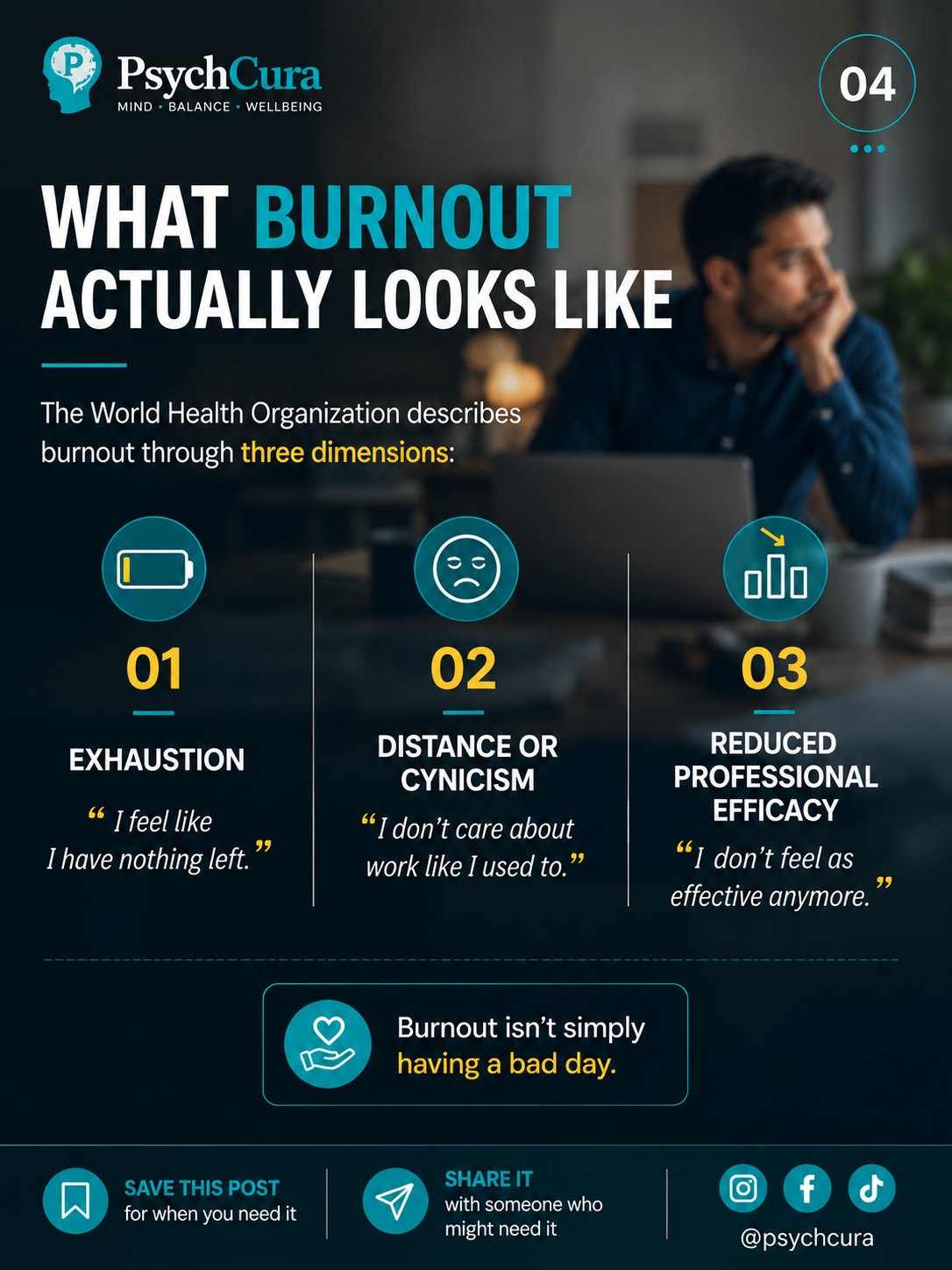
Burnout commonly involves exhaustion, emotional distance or cynicism, and reduced professional effectiveness.
Burnout Is More Than Feeling Tired
Ordinary tiredness often improves after a restful evening, a good night’s sleep or a short break. Burnout usually feels deeper and more persistent.
You might rest physically while continuing to feel emotionally depleted. Activities that once interested you may begin to feel like additional responsibilities. You may also feel guilty for not being productive, even when your mind and body are asking you to slow down.
Common signs of burnout can include:
- Persistent physical, mental or emotional exhaustion
- Difficulty concentrating or making decisions
- Reduced motivation
- Irritability, frustration or emotional numbness
- Feeling detached from work or other responsibilities
- Becoming increasingly cynical or negative
- Changes in sleep or appetite
- Headaches, muscle tension or physical discomfort
- Withdrawing from friends, family or colleagues
- Feeling ineffective, inadequate or unable to keep up
- Losing interest in activities you previously enjoyed
- Dreading the beginning of another day
These experiences can also occur with depression, anxiety, sleep disorders and some physical health conditions. If your symptoms are persistent, worsening or affecting everyday functioning, speak with a qualified mental-health or healthcare professional instead of trying to diagnose yourself.
Why Does Burnout Develop?
Burnout is often framed as an individual self-care problem, but it is rarely caused by one missed break or a lack of resilience.
It can develop when the demands placed upon you repeatedly exceed the resources available to manage them.
Demands may include:
- An excessive workload
- Unrealistic deadlines
- Long or unpredictable working hours
- Emotional labour
- Caregiving responsibilities
- Financial pressure
- Lack of recognition
- Conflicting expectations
- Limited control over decisions
- Poor workplace relationships
- Pressure to remain constantly available
Resources are the things that help you meet those demands, such as:
- Time
- Energy
- Autonomy and control
- Supportive relationships
- Clear expectations
- Fairness and recognition
- Adequate staffing
- Rest and recovery
- Healthy boundaries
- A sense of purpose
When high demands continue while time, energy, control and support remain limited, the risk of burnout can increase. This is why recovery should not focus only on the question, “What is wrong with me?”
A more useful question may be:
“What am I being asked to carry, and what resources do I have to carry it?”
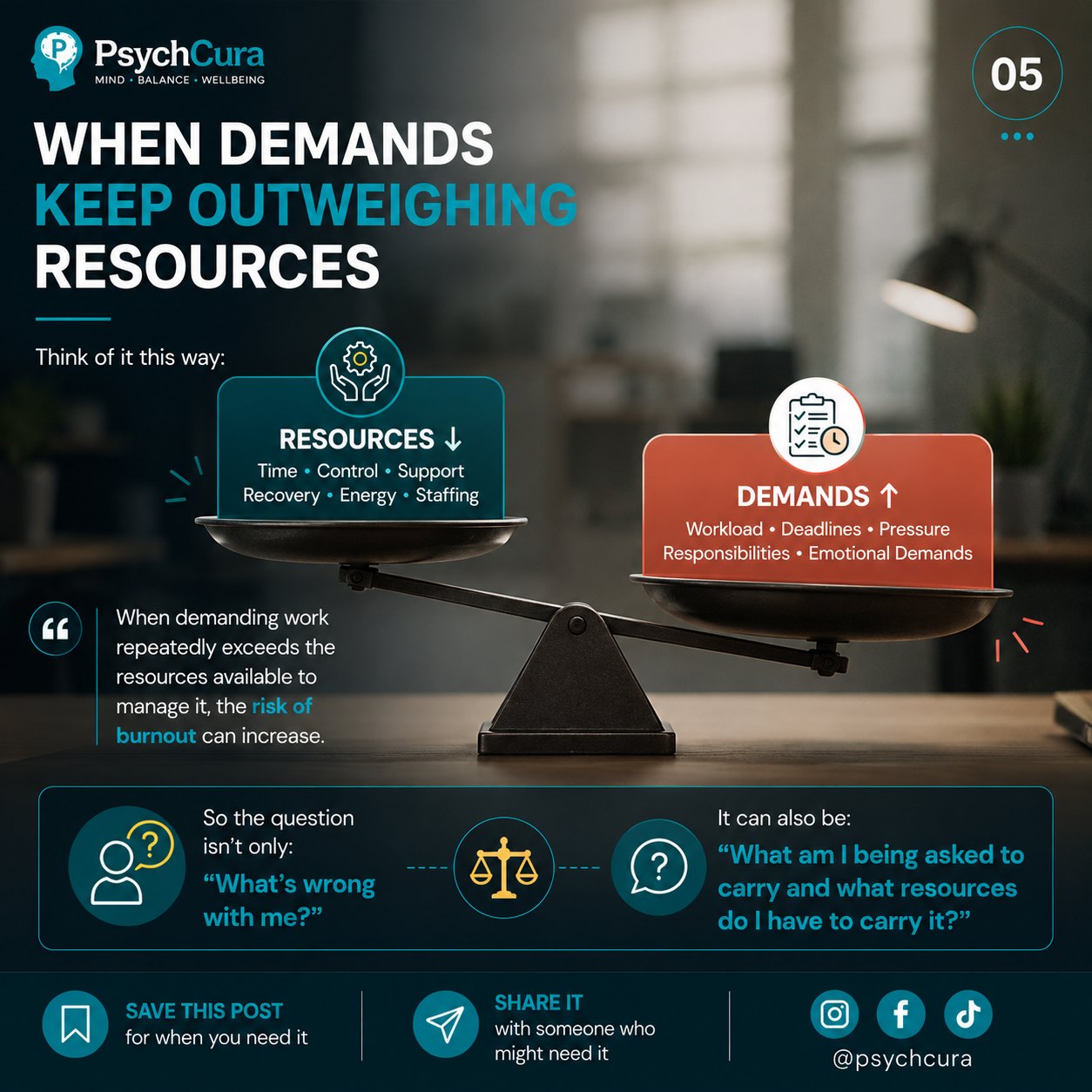
Burnout risk can increase when ongoing demands repeatedly outweigh the time, control, energy and support available to manage them.
Understanding the Five Stages of Burnout
Burnout does not always happen suddenly. For many people, it develops gradually and may initially be mistaken for dedication, ambition or a temporary period of stress.
The five-stage framework can help you reflect on how prolonged stress may progress. However, it is not a diagnostic test, and people may not experience every stage or experience them in the same order.
1. The honeymoon stage
You may begin a new role, responsibility or goal with high energy and enthusiasm. You feel optimistic, productive and eager to prove yourself.
The risk begins when this motivation leads you to take on too much, neglect rest or repeatedly place your own needs last.
2. The onset of stress
Stress begins to occur more frequently. Your energy or concentration may decrease, and sleep may become disrupted. You might become more irritable or anxious while still believing that you should be able to manage everything.
3. Chronic stress
Pressure starts to feel like part of everyday life. Exhaustion becomes more persistent, and anger, cynicism, procrastination or withdrawal may appear.
At this point, “I just need to push through” can become a repeated pattern.
4. Burnout
Exhaustion becomes overwhelming. You may feel detached, isolated or doubtful of your abilities. Coping becomes more difficult, and your work, relationships or everyday functioning may be affected.
5. Habitual burnout
When the underlying conditions remain unchanged, burnout symptoms can become persistent. Ongoing mental and physical fatigue or emotional distress may require professional support.
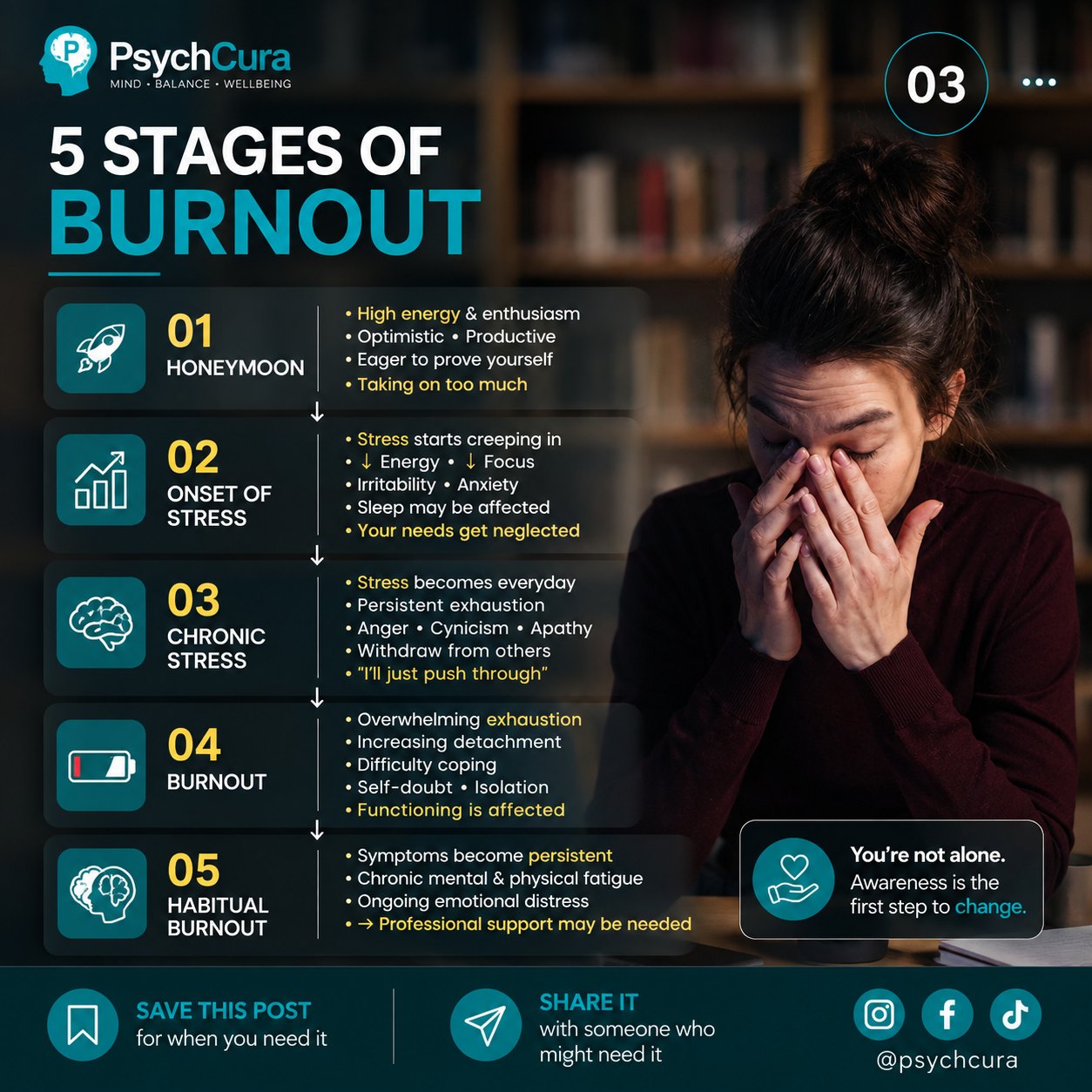
A reflective five-stage burnout framework showing how unmanaged stress may progress from overcommitment to persistent exhaustion.
How to Recover From Burnout
Burnout recovery is rarely achieved through one holiday, one self-care activity or simply sleeping for longer. Rest is important, but sustainable recovery also involves understanding what caused your exhaustion and changing the conditions that continue to drain you.
1. Restore your basic energy
When you are depleted, begin with your most immediate physical and emotional needs.
Try to:
- Protect a consistent sleep routine
- Eat and hydrate regularly
- Take genuine breaks away from work
- Include gentle movement where possible
- Reduce unnecessary stimulation
- Create small periods in which nothing is required of you
Avoid turning recovery into another demanding performance goal. Small, repeatable actions are more useful than an unrealistic routine you cannot maintain.
2. Identify what is draining you
Instead of treating all stress as one large problem, identify its separate sources.
Ask yourself:
- Which responsibilities require the most energy?
- Which demands are temporary, and which are ongoing?
- Where do I feel the least control?
- What am I carrying that does not belong entirely to me?
- Which expectations are realistic?
- What am I afraid might happen if I slow down or say no?
- What support or resources are currently missing?
Naming the source of your exhaustion can make recovery feel more manageable.
3. Reduce what you realistically can
Not every responsibility can be removed, but some may be reduced, delayed, delegated or renegotiated.
You might:
- Ask for clearer priorities
- Break a large task into smaller steps
- Negotiate a more realistic deadline
- Decline an additional responsibility
- Reduce non-essential commitments
- Request help instead of silently struggling
- Stop aiming for perfection where “good enough” is sufficient
A healthy boundary is not a punishment or rejection. It communicates what you can realistically manage while protecting your wellbeing.
4. Rebuild your resources
Reducing demands is only one part of recovery. You also need to rebuild the resources that help you cope.
Consider what would give you more:
- Time
- Control
- Emotional support
- Practical assistance
- Rest
- Connection
- Clarity
- Recognition
- Meaning
- Recovery space
Support might come from a trusted friend, family member, colleague, supervisor, therapist or another healthcare professional. You do not have to wait until you completely stop functioning before asking for help.
5. Reconnect with meaning and purpose
Burnout can make life feel like an endless series of tasks. Recovery includes reconnecting with parts of yourself that are not defined by productivity.
Begin gently. Make space for one small activity that brings connection, enjoyment, creativity, spirituality, calm or meaning. This might involve spending time with someone you trust, reading, walking, creating art, praying, gardening or simply sitting quietly without trying to achieve anything.
The purpose is not to force yourself to feel happy. It is to remember that your life contains more than demands.
6. Reassess what needs to change
As your energy begins to return, ask:
“If nothing changes, what is likely to bring me back to this point?”
Sustainable burnout recovery may require changing more than your daily routine. It could involve reconsidering workload, responsibilities, availability, workplace expectations, caregiving arrangements or the amount of support you receive.
Recovery is not about returning to the same unsustainable conditions with a greater ability to endure them.
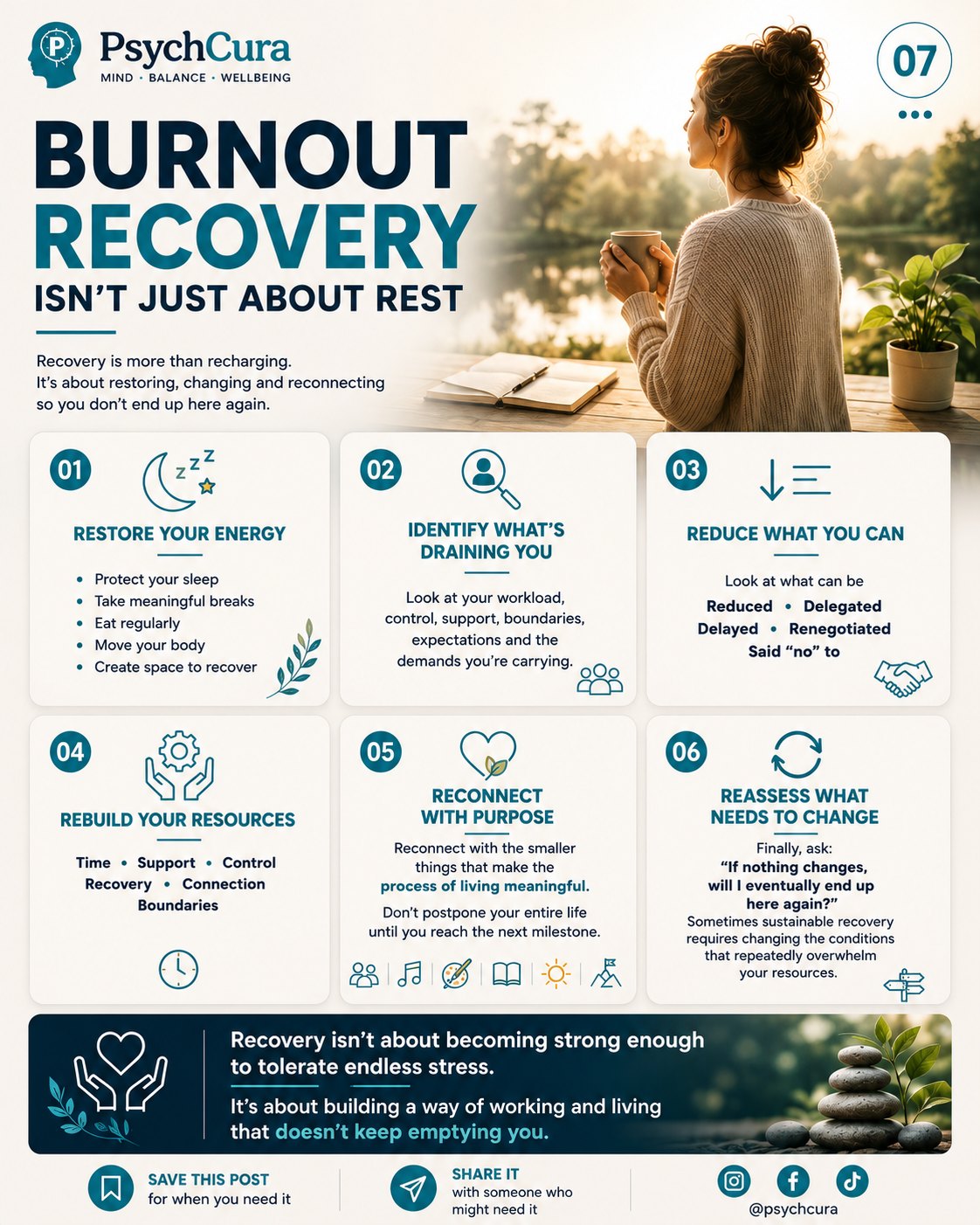
Burnout recovery involves restoring energy, identifying drains, reducing manageable demands, rebuilding resources and creating sustainable change.
Healing Does Not Follow a Perfect Timeline
Burnout recovery is not linear. You may have days when you feel hopeful and productive, followed by days when your energy drops again.
This does not mean you are failing.
Your mind and body may need time to adjust after prolonged stress. Progress can look like recognizing your limits earlier, asking for support, feeling less guilty about resting or noticing when you are beginning to overextend yourself.
Small changes, practised consistently and compassionately, can contribute to meaningful recovery.
Work Through Burnout Recovery at Your Own Pace
Knowing that you need to make a change is one thing. Understanding where to begin can be much harder—especially when you already feel mentally and emotionally exhausted.
The PsychCura Burnout Recovery Workbook offers structured, guided exercises that allow you to pause, reflect and work through your experiences at your own pace.
It can help you:
- Recognize your personal warning signs
- Understand what has been draining your energy
- Reflect on changes in your work and wellbeing
- Identify demands that may be reduced or renegotiated
- Explore healthier boundaries
- Rebuild your available resources
- Reconnect with the parts of life that feel meaningful
- Develop a realistic and sustainable recovery plan
You do not need to complete everything in one sitting. You can move through the workbook gradually, return to exercises when you feel ready and use your reflections to identify the changes that matter most to you.
Explore the PsychCura Burnout Recovery Workbook
The workbook is a self-guided educational resource. It is not a diagnosis, treatment or replacement for individualized care from a qualified professional.
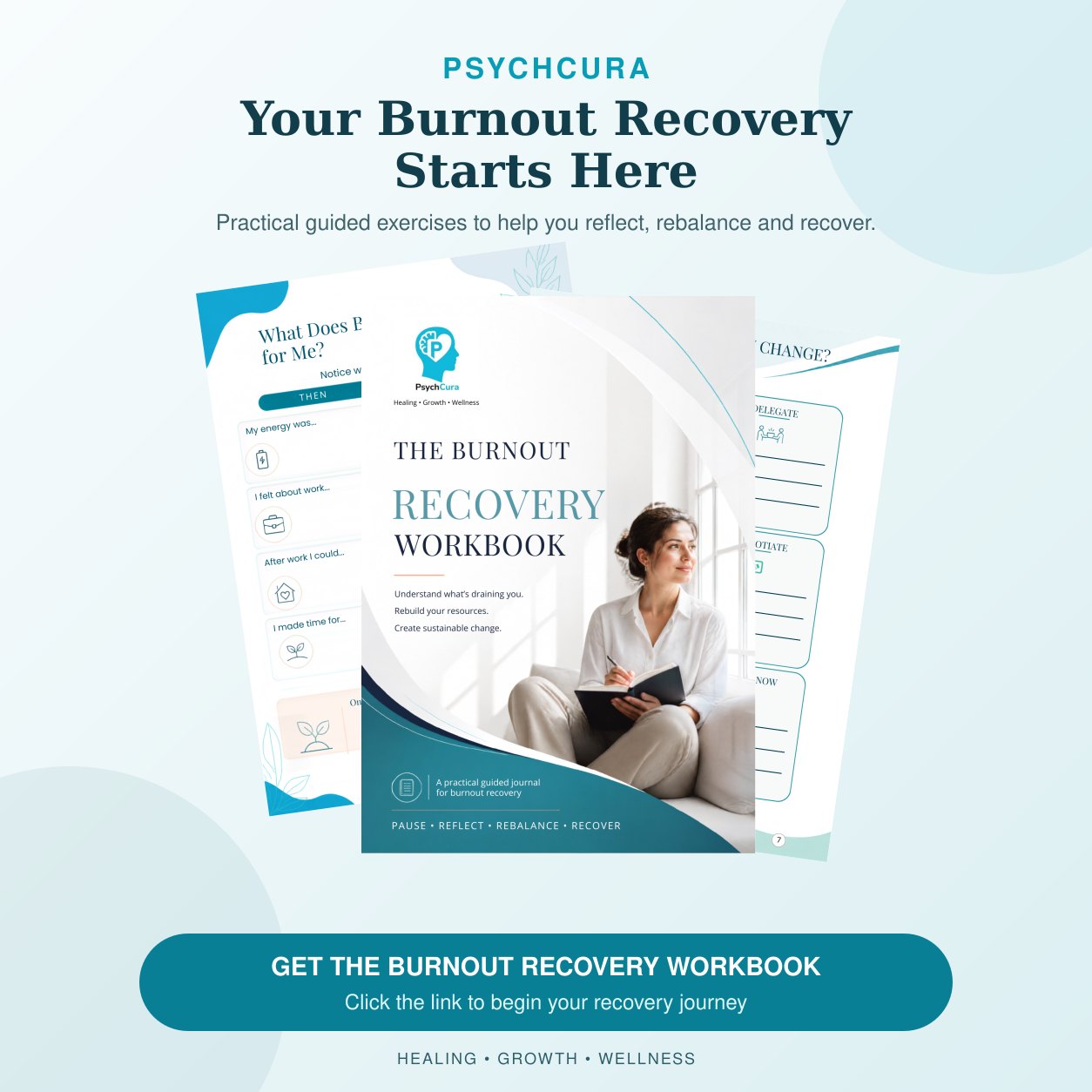
The PsychCura Burnout Recovery Workbook includes practical guided exercises to help you reflect, rebalance and plan sustainable changes.
When Should You Seek Professional Support?
Consider speaking with a qualified mental-health or healthcare professional if:
- Exhaustion persists despite making changes
- You are struggling to perform everyday tasks
- Sleep or appetite changes are becoming severe
- Anxiety, hopelessness or low mood continues
- Physical symptoms are persistent or concerning
- You are relying on substances to cope
- Your relationships or work are being significantly affected
- You feel unable to manage your situation alone
Burnout can overlap with depression, anxiety and physical health problems, so a professional assessment may help you understand what you are experiencing and what kind of support would be appropriate.
If you are thinking about harming yourself, feel unable to stay safe or believe you may be in immediate danger, contact your local emergency services or go to the nearest emergency department immediately.
Final Thoughts
Burnout is not proof that you are weak, incapable or insufficiently motivated. It can be a signal that you have been carrying too much for too long with too few resources.
Recovery begins by listening to that signal rather than fighting it.
Rest where you can. Look honestly at what is draining you. Ask for support. Protect your boundaries and make changes that allow your energy to be restored—not continuously emptied.
You do not have to repair everything today. One compassionate, manageable step is still a meaningful beginning.